
Katie
Copeland
J.D.
Attorney · Author · Access Architect
Laugh → Listen → Learn → Act™
Katie Copeland is a Texas attorney, author, and access architect developing public-facing legal frameworks and resources on ADA Title II, meaningful court access, and due process. Her work translates complex access failures into clear questions, practical tools, and humane systems reform.

Get updates on The Invisible Barrier, new publications, and resources for court access and systems change.
The Invisible Barrier
Disability, Due Process, and the Right to Meaningful Participation
A first-person account of what happens when a court promises a fair hearing and gives a disabled person no usable way to take part in it — and four questions any judge can ask to fix it.
"The law already requires this. The harm is already happening. And the people who will change it are already in the room."
Recognized by the Profession
ABA Commission on Disability Rights
April 7, 2026
The ABA Commission on Disability Rights amplified Katie's article "Access Is Not Advantage" — recognizing her argument that disability accommodations in court are legal requirements, not judicial favors.
The people who will change this are already in the room.
Changing How Courts Understand Access
From published scholarship to legislative proposals, Katie's work provides the legal profession with practical tools for systemic change.
The Invisible Barrier
A first-person account of what happens when a court promises a fair hearing and gives a disabled person no usable way to take part in it — and four questions any judge can ask to fix it.
Learn More About The Invisible Barrier →Access Is Not Advantage
Published by the American Bar Association Commission on Disability Rights, April 2026. A foundational argument that disability accommodations are legal requirements, not judicial favors.
Read More About Access Is Not Advantage →The Copeland Questions™
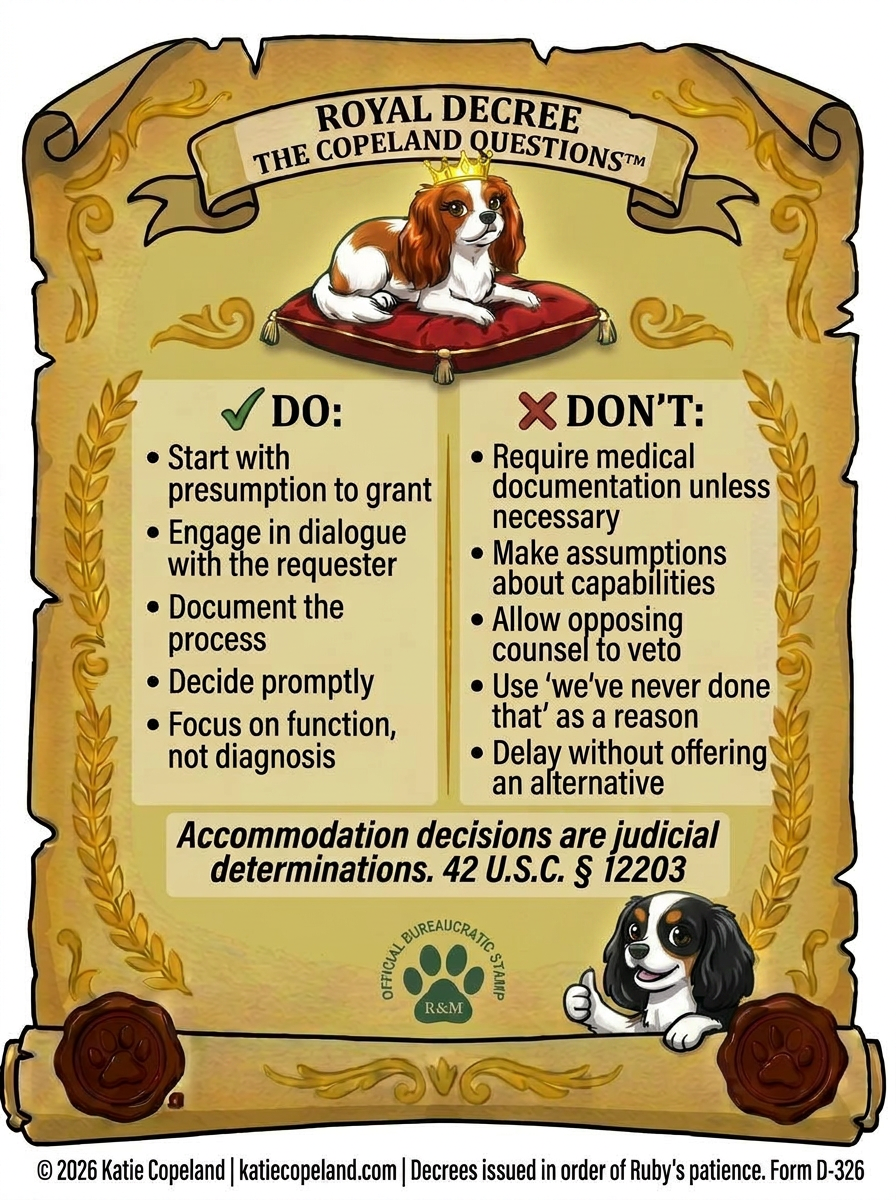
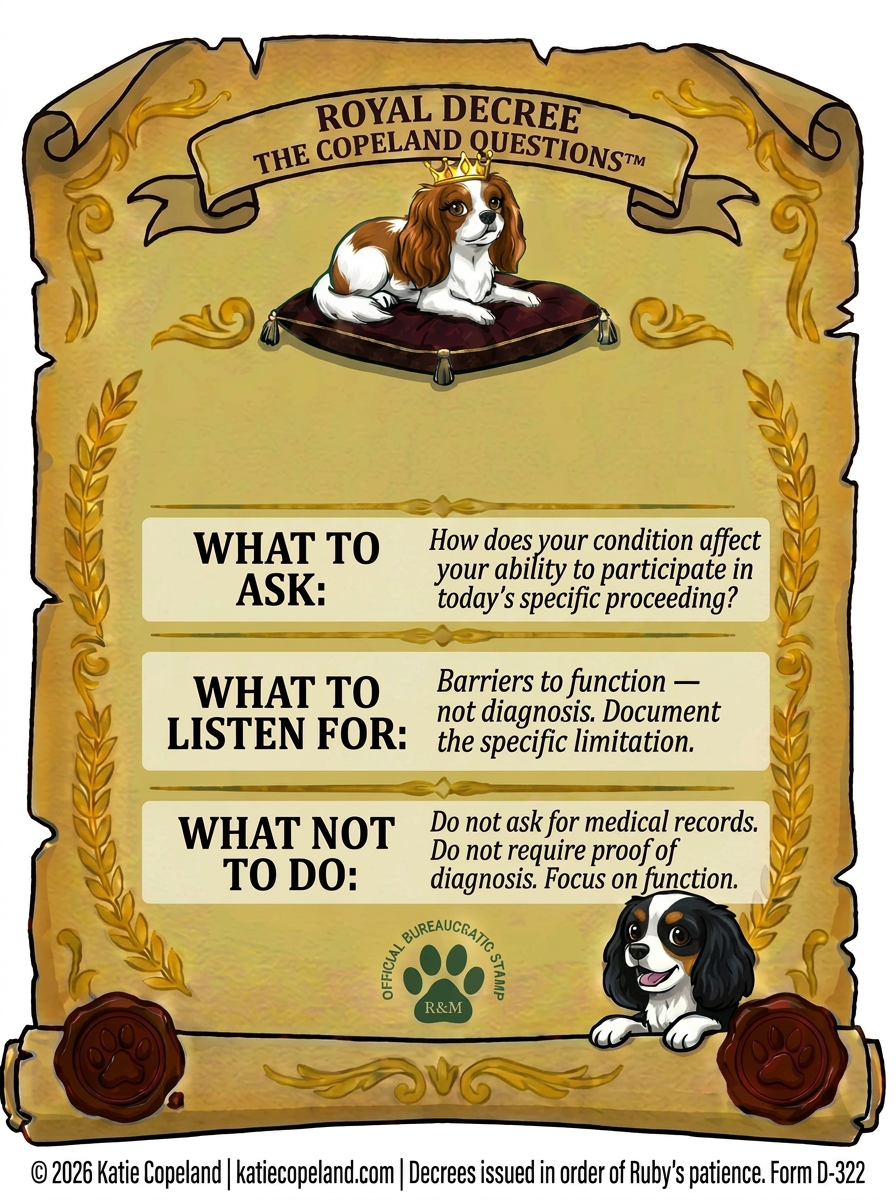
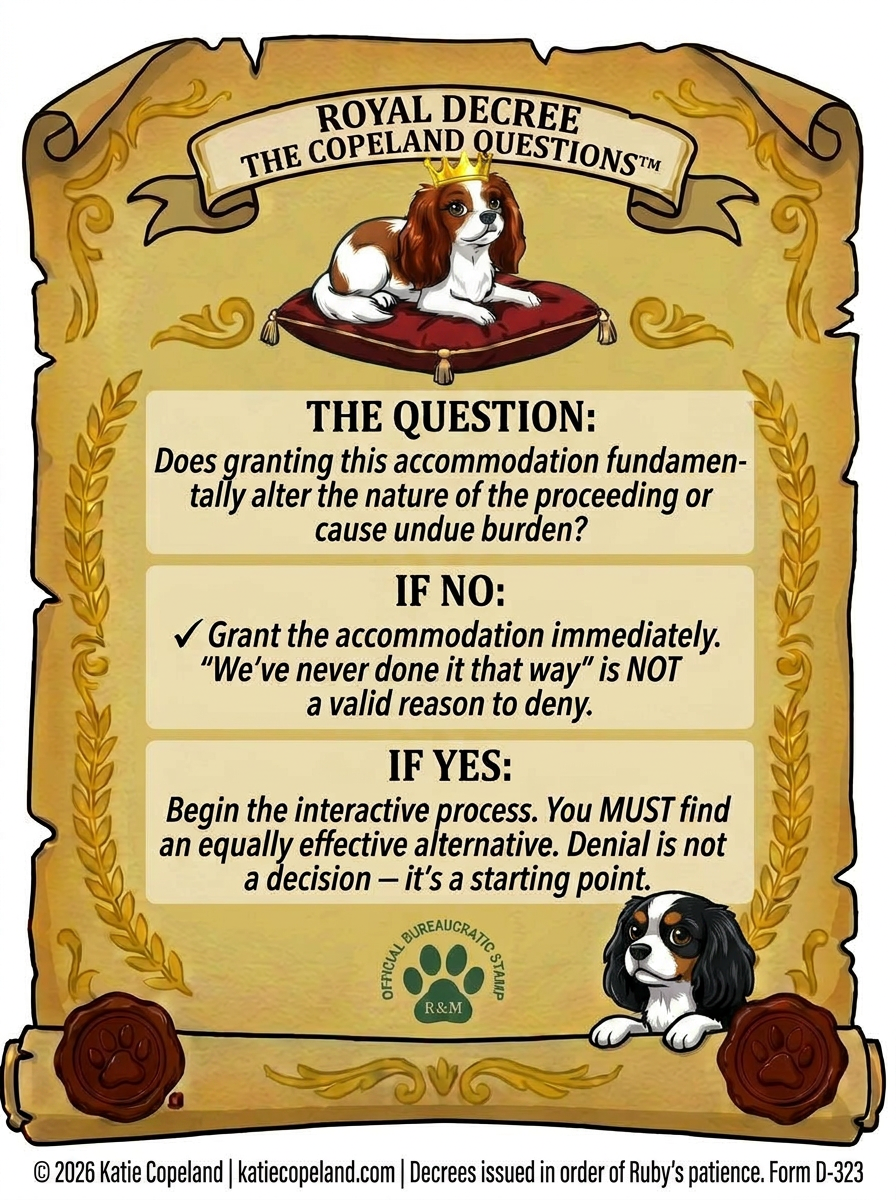
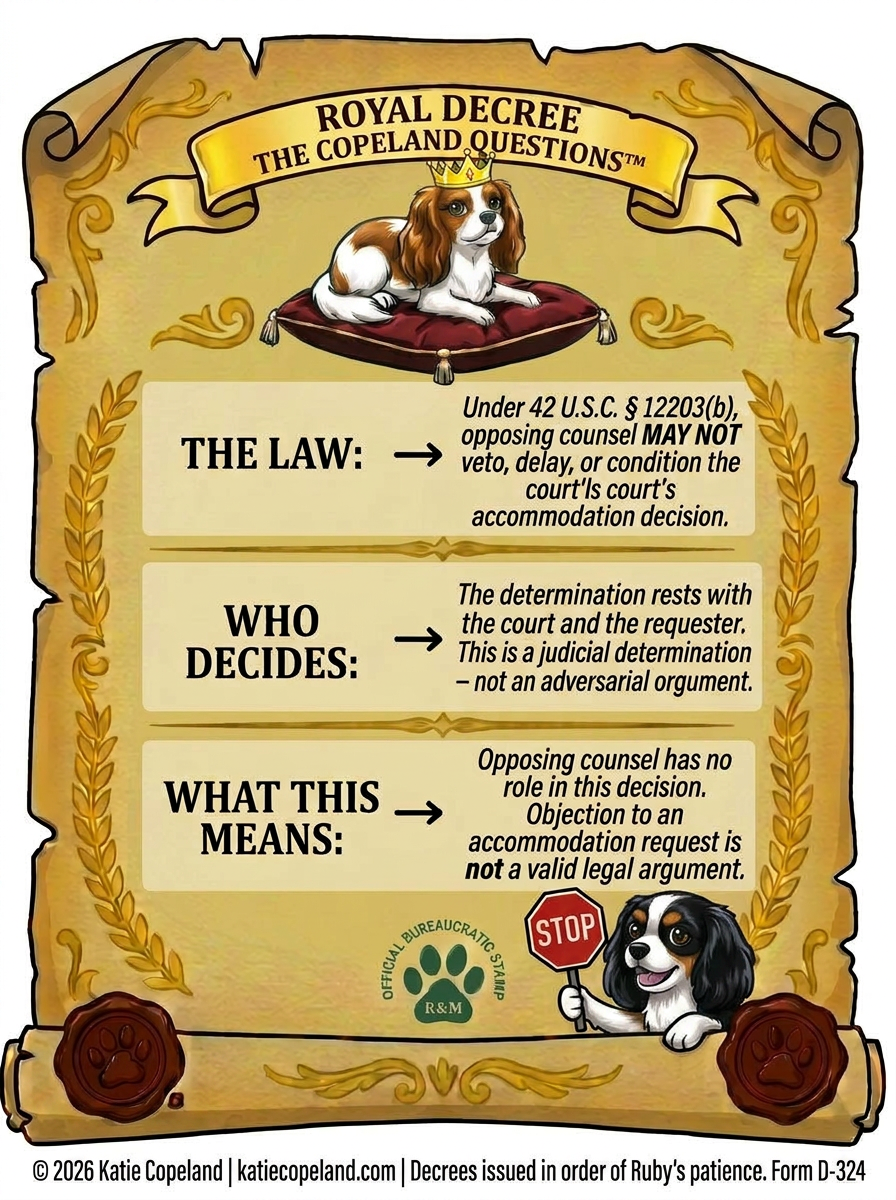
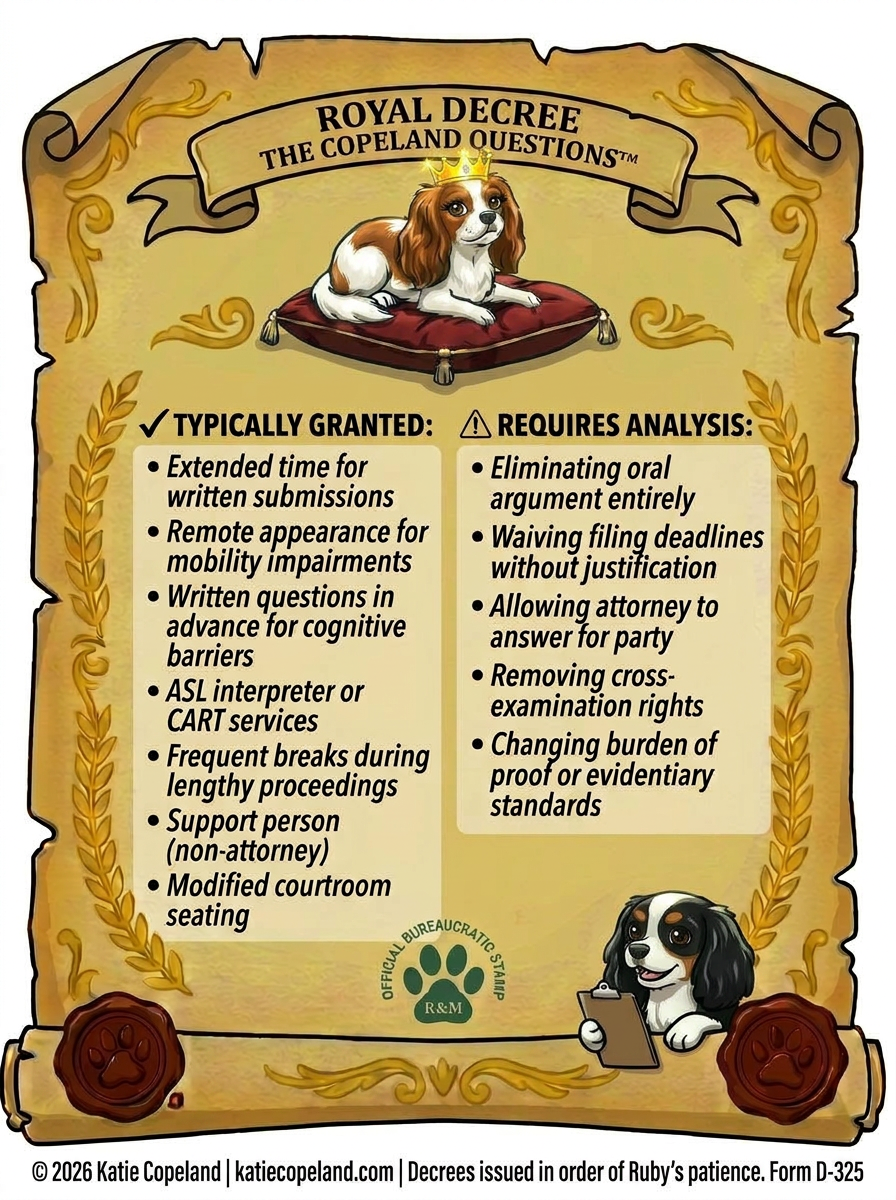
Four questions any judge can ask, on the record, whenever someone needs a way to take part — a practical tool for courts, attorneys, advocates, and litigants.
Discover The Copeland Questions Framework →“The law already requires this. The harm is already happening. And the people who will change it are already in the room. Some of them are reading this sentence right now.” From The Invisible Barrier
Three Pillars
The principles that anchor every argument, framework, and reform proposal.
Structural Integrity
"Access is not a courtesy. It is the doorway to due process."
Courts must build compliance into their infrastructure — not treat it as an afterthought when someone asks. A right without a usable route is only theoretical.
Meaningful Participation
"Presence alone is not enough."
Being in the courtroom is not the same as being heard. True access means the ability to organize, communicate, respond, and participate fully and effectively.
Cognitive Prosthetics
"Support tools restore — not distort — participation."
Accommodations are not advantages. They are tools that restore the ability to participate on equal terms with everyone else.
Start Where the System Feels Most Unclear
These public resources are built for parents, advocates, and court observers who need language for what is happening — and a clearer route through it.
A Record Is Not Reality
A grounding resource for parents trying to preserve truth, coherence, and meaningful voice while building a court record under pressure.
Read the Parent Resource →The Copeland Questions™
A practical diagnostic framework for asking whether access was meaningful, whether the route was usable, and whether process preserved reality.
Explore the Framework →

Three Dimensions of the Work
Katie's mission spans personal thought leadership, legal practice, and systemic advocacy.
Scholar & Author
Writing, speaking, and thought leadership that reframes how the legal profession understands disability access in courts.
katiecopeland.com
Legal Practice
Direct legal services and consultation applying The Copeland Questions™ framework to real cases and court systems.
copelandlawtexas.com
Systems Justice
Public education, court access reform, and advocacy through the Systems Justice Institute.
systemsjusticeinstitute.org